
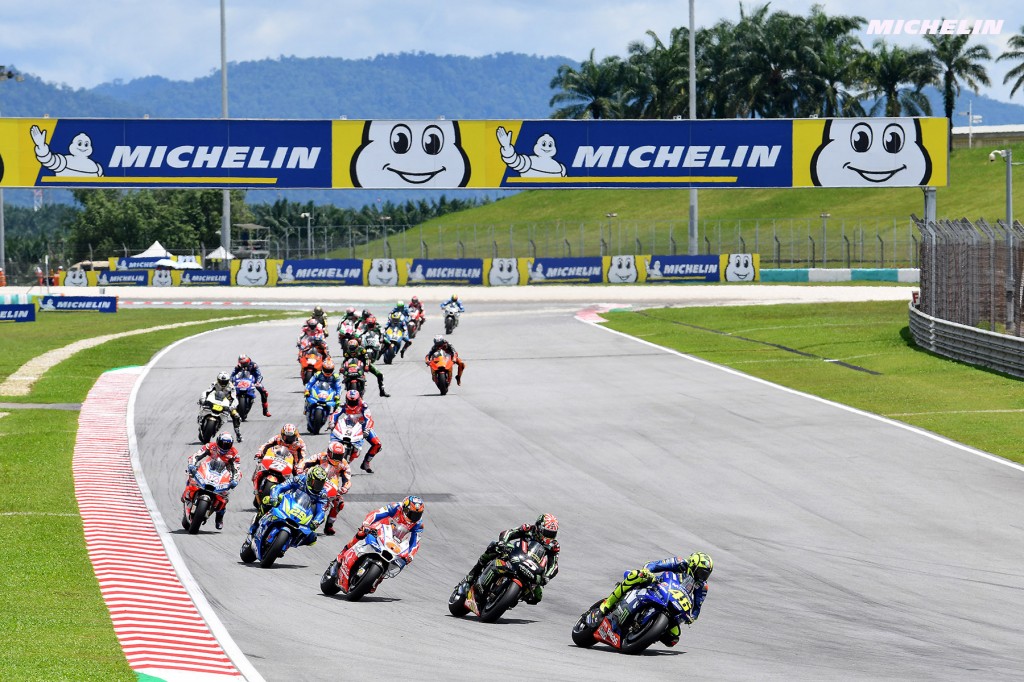
It’s the final fly-away round of the MotoGP season this weekend, as riders and teams prepare to finish a grueling three weeks of racing across Asia and Australasia.
Sepang is one of the most challenging circuits on the calendar for the team at Michelin, where the weather is often hot and humid, with the potential for brief but heavy rain.
The 2019 MotoGP champion Marc Marquez finished ahead of Alex Rins to claim the win at Sepang in 2018, setting a race duration record in the process on the Repsol Honda. Former teammate Dani Pedrosa is still the all-time lap record holder, after he set a 1m 59.053s lap back in 2015. That means that Sepang remains one of the few circuits on the MotoGP calendar where a record set on Bridgestone tyres has yet to be broken on Michelin’s race tyres.
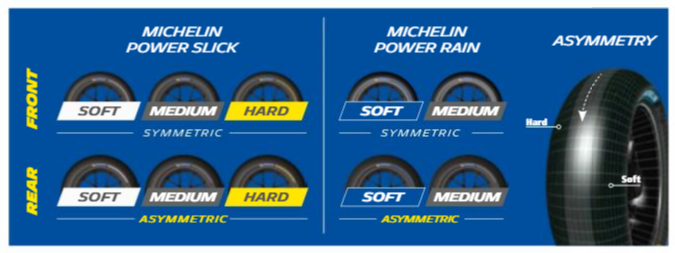
With ten right-handers to five left-handers, Sepang is also another circuit that puts more strain on the right shoulder of the tyre, and that means all rear Power Slick and Power Rain tyres will be of asymmetric design with a harder rubber compound on the right hand side.
Ahead of the action in Sepang, Michelin Motorsport Two-Wheel Manager Piero Taramasso commented:
“The end of this long and exhausting tour of Asia and Oceania is drawing to a close, but that does not mean we are ready to relax, because the Malaysian GP is a very important race and also one that requires the utmost respect.
Over the last three events we have had a huge mix of weather, from torrential rain to high temperatures and we now expect to roll that all in to one weekend here in Malaysia, but without the chill we had in Australia.
We have probably more data from Sepang than any other circuit, but it is still a track that demands total respect. It’s very technical, has an abrasive surface and usually the asphalt can be very hot. This is one of the venues where the tyres face the possibility of the greatest difference in conditions, not only over the weekend, but hourly, as we can have torrential rain and then the track dries quickly.
The correct rubber is needed to work in those situations and from our intensive testing and knowledge of the circuit we know we have that.”

