
Before you read the rest of this article, just take a moment to pop your credit or debit card out of your wallet.
Not very big, is it?
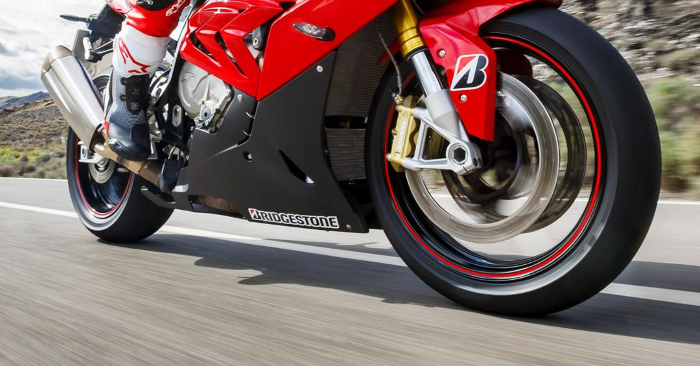
But at around 86mm x 54mm, it’s roughly the same size as the contact patch on one of your motorcycle’s tyres – and it’s only those two credit-card sized bits of rubber that hold you and your bike on the road.
That’s why it’s so important to maintain the correct tyre pressure at all times, to ensure optimum levels of performance from your tyres at all times.
As Bridgestone’s Gary Hartshorne explained to Fast Bikes last year, the design of your tyre will be compromised if these pressure isn’t correct.
If, for example, your tyre pressure is too low, the tyre will overheat, which increases the rate of wear. Plus it can promote uneven wear, which will upset your bike’s handling and probably mean replacing your tyres prematurely – and no one likes spending money they don’t have to.
If you set your pressures too high, the tyre won’t flex or deform correctly on the road surface, which reduces the amount of grip they’ll offer.
Gary advises that tyre pressures should only be lowered when you’re riding on track – otherwise you should stick to the manufacturer recommended pressure regardless of the type of riding you’re doing on the road.
Try to check your pressures once per week, or before every ride if you don’t ride regularly. Pressures should be adjusted from cold, and don’t forget that any garage offering ‘free’ air doesn’t have to calibrate their gauge – so get a good quality, hand held one for accurate measurements.
All tyres will lose pressure over time – from valves, the tyre/rim seal and through the rubber itself, which is a porous material.
The pressure is also there to support the weight of the bike, hence the load index displayed alongside the speed rating on the sidewall of your tyre.
The load index is linked to the recommended pressure, so riding on an under-inflated tyre will overload the carcass and in some cases cause internal damage which you can’t see until it’s too late.
If in doubt, always consult your local motorcycle tyre expert.

