
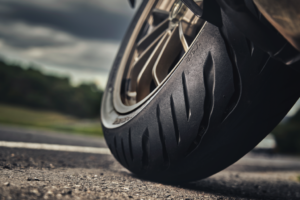
 Mileage is a hot topic in the motorcycle tyre world. With so many variables, two riders on identical bikes are likely to wear out identical tyres over completely different distances.
Trying to get to the bottom of things in the January 2015 edition of Ride magazine, Michelin’s Tony Charlton has been giving his advice on how to get maximum mileage out of your motorcycle tyres.
The good news is, many of the factors which affect the lifespan of a tyre are easily controlled by the rider. These include:
- Under Inflation
- Overloading
- Poor Storage
- Excessive Heat
- Heavy or Repeat Impacts
- Infrequent Use
When it comes to riding style, high speeds, aggressive cornering, acceleration and braking will all speed up the wearing of a tyre. One of the main reasons we ride our bikes is because of the fast acceleration, and with that we accept the speed, handling and hard cornering. In one respect, what is the point in extending the life of your tyres, if you restrain your riding to the point where you no longer enjoy it? It’s a simple fact that, just as faster riding costs you more in terms of MPG, it also costs you more in terms of tyre life.
So, when is a tyre at the end of it’s life? The ideal end is when it has reached the legal tread limit, however, as many riders will know, tyres can square off and affect the handling of the bike before the tread has been worn down as far as is allowed by law. Manufacturers have introduced dual compound tyres, with harder rubber in the centre of the tyre, to help combat the problem of squared off tyres. Unfortunately, it doesn’t matter how twisty your routes are, you are still going to spend most of your time on the centre of the tyre, and all manufacturers can do is try to slow down the effects of that. On the rear tyre, the centre is where you will hit the tread wear indicators first.
Ideally a tyre’s profile will remain the same throughout its entire life, from cradle to grave if you will. Of course, some tyres are better than others, but you can help too, as the biggest cause of premature, excessive or uneven wear is incorrect tyre pressures.
Tony explains: “At Michelin we recommend following the bike manufacturer’s tyre pressures. Check them every two weeks whether the bike’s being used or not – it takes less than two minutes. I bet you know what your last set of tyres cost, but do you know what their pressures should be?” He then goes on to say “If you’re lucky enough to have more than one bike, or if you ride infrequently, it’s worth checking them before every ride. In most cases the recommended pressures work well, so we’d advise against experimenting without good cause. But a fully loaded fast run down an autobahn, or scratching round the Scottish Highlands, is very different to riding to work every day, and your tyres may reflect this. If you spot any uneven or unusual wear, chat with a tyre expert and let them have a look, or give the manufacturer a call. It may be that for your use a slight change to the pressures might be appropriate, allowing you to get the most miles out of your rubber.”
And when you get into the routine of checking and maintaining your pressures, just make sure your pressure gauge is accurate….

