
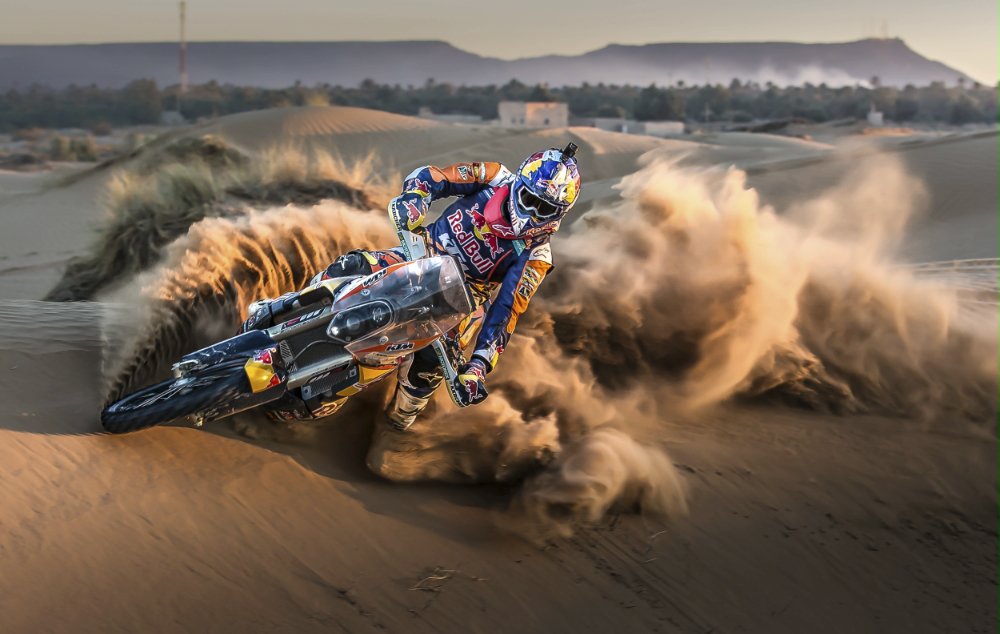
With the 2016 Dakar Rally just around the corner Michelin, along with a whole host of supported riders, are undergoing last minute preparations before heading to South America for one of the most famous extreme races on the planet.
This year there are 143 bike entries, all aiming to complete the grueling 9,319 kilometre race which will leave Buenos Aires, Argentina on 2nd January. Riders will hope to cross the finishing line in the city of Rosario two weeks later on 16th January, after thousands of miles of sand dunes, twisty, rocky trails, dry river beds and climbs to altitudes of 4,500 metres plus.
An initial ride will take competitors from Buenos Aires to Rosario, but the first real stage kicks off setting out from from Rosario to Villa Carlos Paz on the twisty, undulating dirt roads of the Argentine countryside.
Stage 2’s run to Termas de Rio Hondo will put the riders through their paces of the course of a 450km test, as well as 236km in road sections, while the following day’s action (663km, including 314km against the clock) will provide the opportunistic rider with a chance to steal an early advantage, especially if the weather is wet.
Day 4 will take the difficulty rating up a level as riders take on a loop around San Salvador de Jujuy, with altitudes in excess of 3,500 metres. For the first section of the 2016 event’s first marathon stage (with the first genuine overnight parc ferme since 1998), there will be plenty of different challenges as the terrain switches from sandy to stony.
The second section will see the bikers climb even further to Uyini in neighbouring Bolivia. There they will reach 4,600m above sea level, the highest altitude ever visited by the Dakar. This adds a further level of complication, as riders need to take care of not only the bikes but also themselves at these kinds of altitudes. This stage will also test their navigational skills as the race heads off road for the first time since the start.
Stage 6 (Uyuni-Uyuni) will be the longest of the 2016 Dakar Rally, as riders contend with altitudes of between 3,500 and 4,200 metres over a blend of dirt, sand and river beds that could become treacherous if it rains.
At the end of the first week, survivors will have a day of rest in Salta, northwest Argentina.
Week 2 starts with the rally’s first dunes, which riders will encouter en route to Belen where the more experienced riders could pull out some big gaps.
The ninth stage will take in a loop starting and finishing in Belen, and will be the first day of the bikers’ second marathon leg. The main challenges will be navigation and coping with high temperatures.
The second part of this marathon run from Belen to La Rioja will then cross the infamous Fiambala dunes. This will be the longest day of off-road riding and dunes, giving impetus to those who revel in competing in the desert.
Stage 11 (La Rioja-San Juan) will be very similar, with more sand and even portions of fesh-fesh in places as competitors can start to think about the finish line.
The penultimate day will be the longest of the 2016 Dakar, with more than 900km to cover as the convoy returns to Villa Carlos Paz, with everyone taking care to avoid making any last-minute mistakes.
The final 699km run to the finish in Rosario will test riders with a mix of undulating, twisty terrain and faster stretches over sandy ground. For those locked in final day battles for position, there will be little if any time to savour the last stage of the 2016 Dakar.
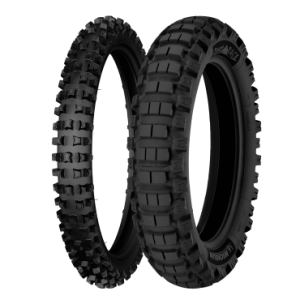
Find out more about the Michelin Desert Race – they tyre of choice for the Dakar Rally, available to the UK trade from Cambrian Tyres!

